


A keyword list is not a strategy. It’s a shopping list without a recipe.
Most SEO plans I inherit are exactly that: a spreadsheet of keywords, each assigned to a blog post, published on a schedule. Months later, traffic is flat, a few posts rank for terms nobody buys with, and the money pages haven’t moved. The problem isn’t effort. It’s the model.
Keyword chasing vs topic ownership
Chasing keywords treats every search term as a separate battle. Owning a topic means becoming the most complete, best-structured and most trusted resource on a subject that actually makes you money — so Google (and AI search) has every reason to rank you for the whole cluster, not just one phrase.
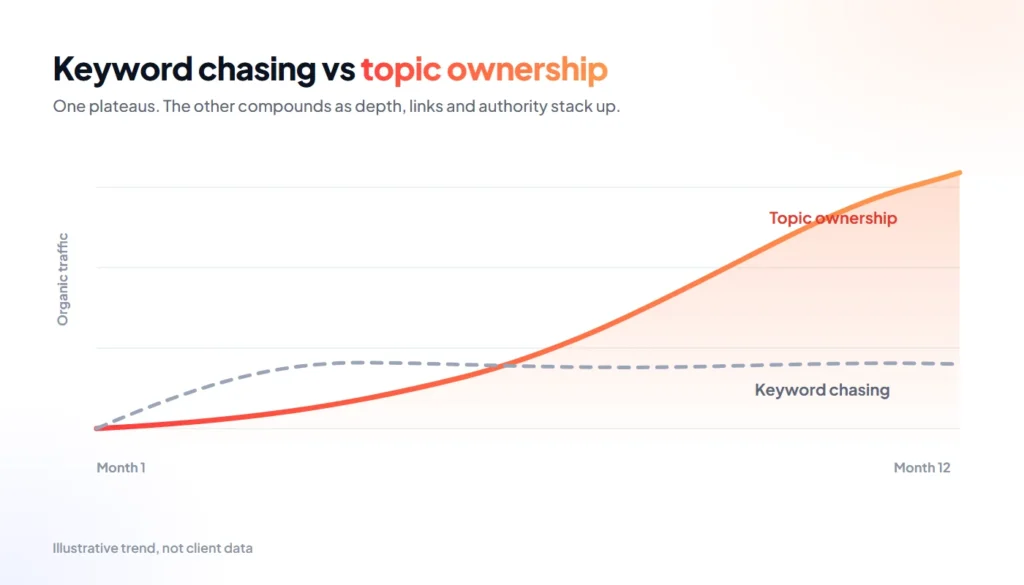
- Keyword chasing: lots of thin pages, quick wins that fade, pages competing with each other.
- Topic ownership: fewer, deeper pages, connected by internal links, each one strengthening the others.
What actually moved the needle
The B2B brand that doubled its organic traffic in six months didn’t publish more. It published smarter — and fixed the foundations first.
- Indexation fixed first. Important pages weren’t being crawled or indexed properly, so nothing else could work until they were.
- Four thin pages consolidated into one strong page. They had been competing for the same searches and splitting authority.
- Support content built around one commercial topic. Every new article answered a real buyer question and linked back to the money page.
- Internal links pointed to the pages that earn revenue. Authority flowed to where it mattered.
Build a cluster, not a calendar
A topic cluster has one pillar page for the commercial term and a set of supporting articles that answer every related question a buyer has: materials, costs, comparisons, examples, checklists and FAQs. Every supporting article links to the pillar, and the pillar links out to each of them.
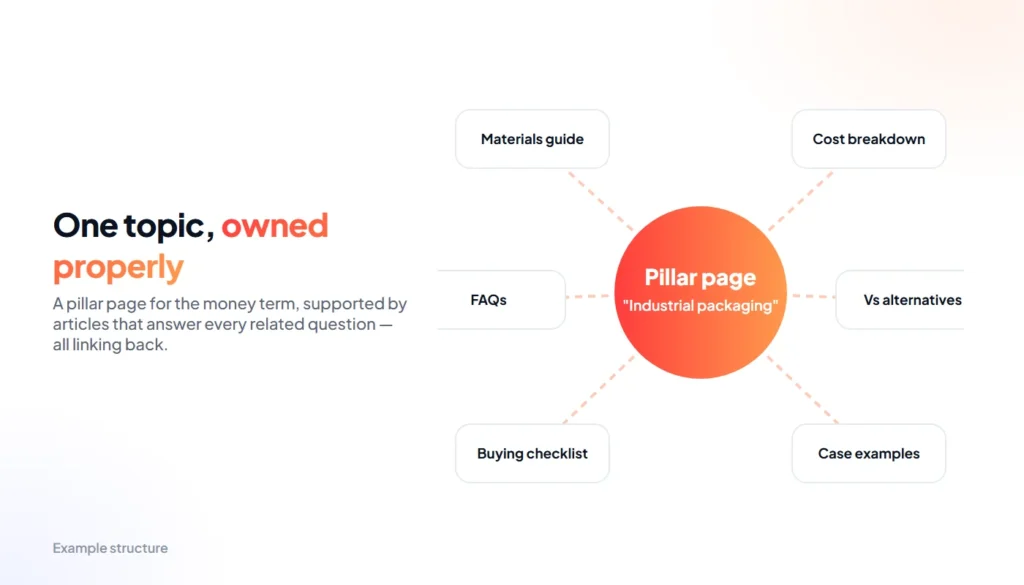
This structure tells search engines — and AI assistants — that you cover the subject in depth. It also helps visitors move naturally from a research question to the page where they can buy or enquire.
Consolidate before you create
Before writing anything new, look for pages that compete with each other. Several short pages targeting the same idea will split clicks, links and relevance. Merging them into one strong page, with redirects from the old URLs, is often the fastest win available.
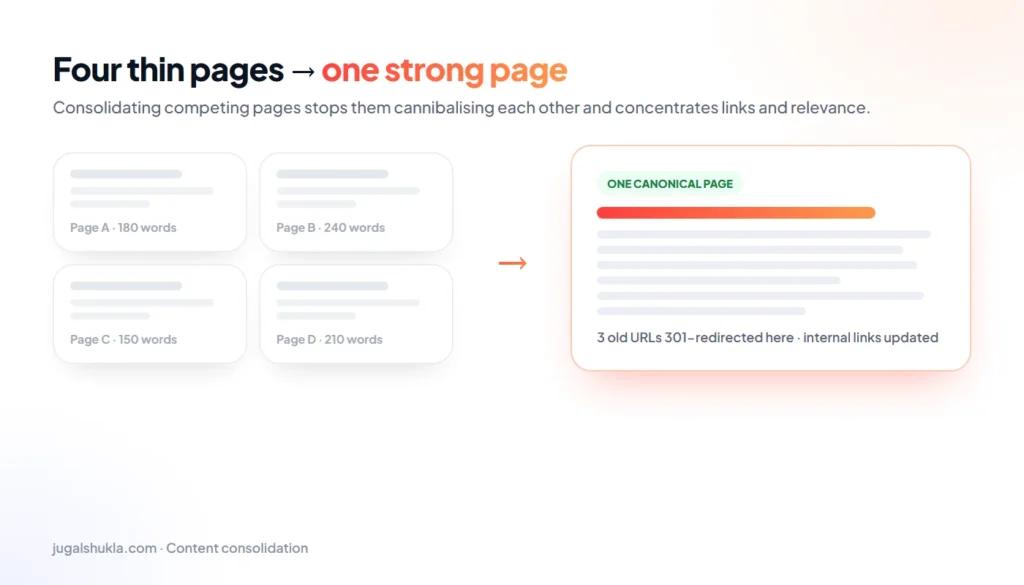
- Find pages targeting the same intent (Search Console’s queries report is a good start).
- Keep the strongest URL and merge the best content from the others into it.
- 301-redirect the old URLs and update every internal link.
- Request indexing and watch the combined page climb.
The compounding formula
Compounding comes from depth plus internal linking plus technical health. Everything else is decoration. Get those three right on the topics that make you money, and every new article makes the existing ones stronger.
If your traffic is flat while competitors climb, the answer is rarely “publish more”. It’s usually “fix the foundations, consolidate, and own one topic at a time”. That’s exactly how I run SEO for clients.